A tree fell on your Cape Fear home. What now?
Tall pines snap and shallow-rooted trees topple in saturated coastal soil during tropical storms. Here is what to do first, and how insurance usually handles it.
Last reviewed against official sources. General information, not insurance or legal advice.
Get people out of the rooms under the tree, stay away from wires, photograph everything, and call your insurer before or as the tree is removed. A tree that wind blows onto the house is generally covered under the policy that covers wind at your address, often with a limit for removal. A neighbor's tree that falls on your house is usually your own insurer's claim.
The first hour
- Move everyone away from rooms under the tree and from sagging ceilings.
- Stay clear of wires. If a line is touching the tree, house or ground, call Duke Energy or your electric cooperative and 911.
- Leave if you smell gas, and call the gas company from outside.
- Photograph and video the tree, where it struck, the break or root ball, and every damaged room.
- Call your insurer (and NCIUA if it covers wind) and ask whether they need to see the tree before removal and what removal they cover.
- Hire an insured tree service for removal. A tree resting on a roof can shift without warning.
- Tarp the opening once the tree is off, and keep every receipt.
Why coastal trees come down
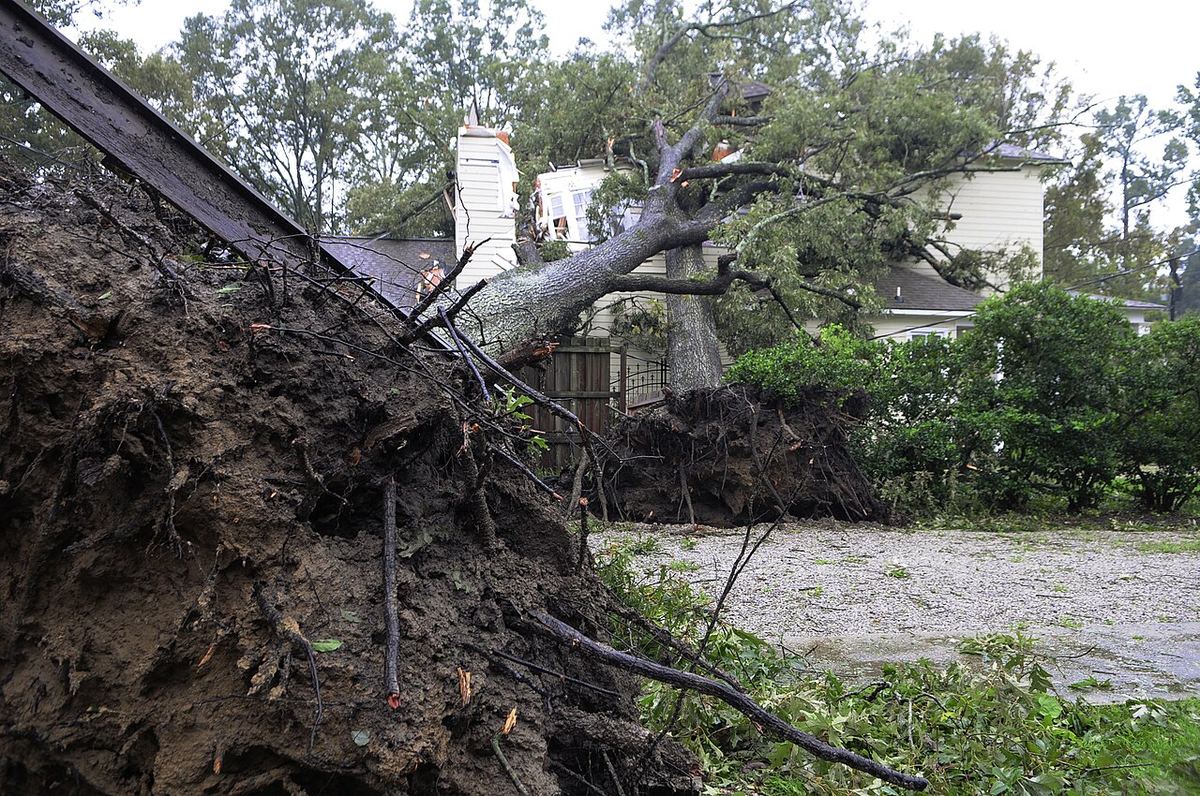
Short answer: long rain followed by strong wind. Tropical systems can soak the ground for days before the strongest gusts arrive, so even healthy trees uproot.
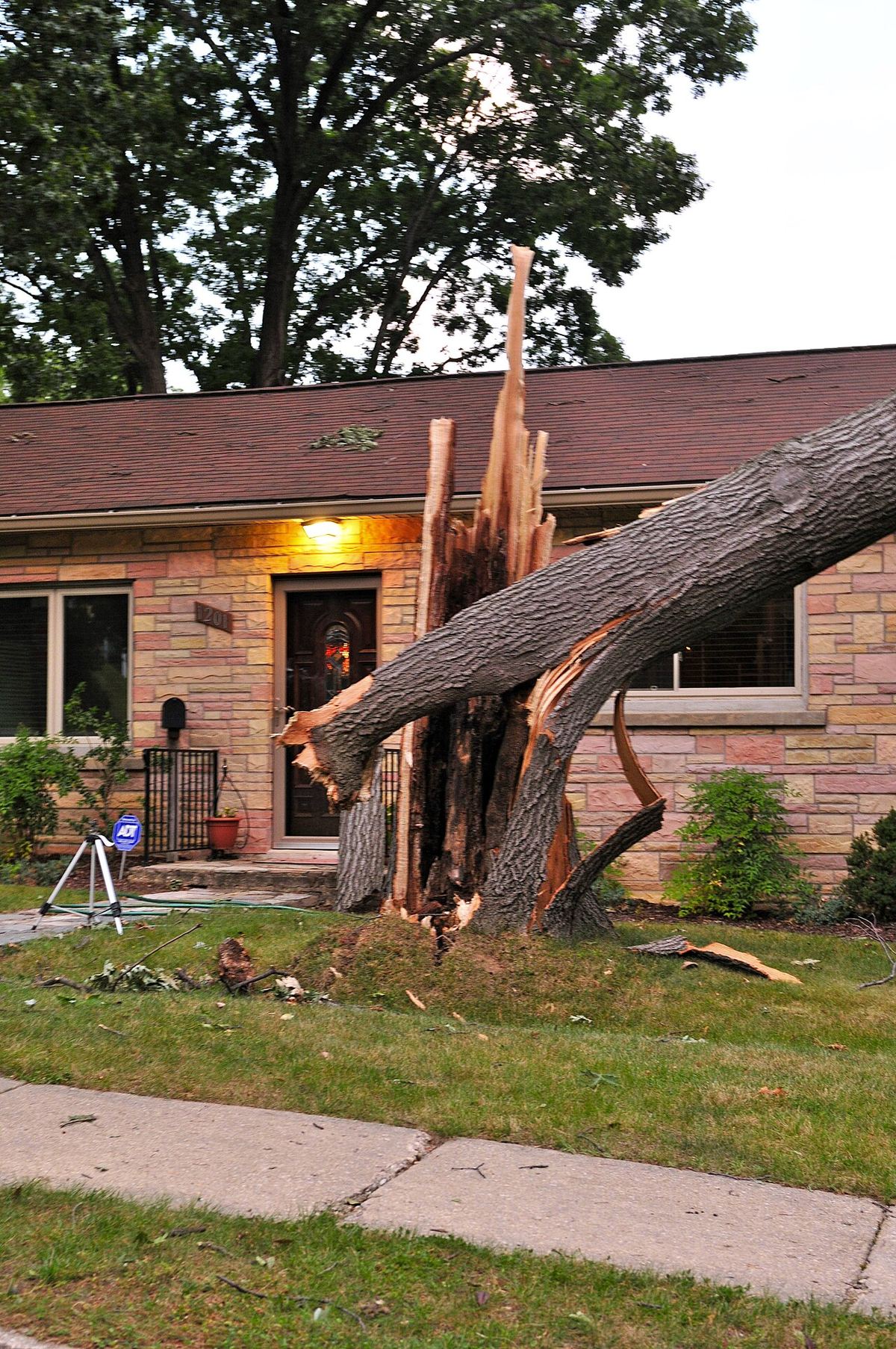
Florence is the local example: the National Weather Service recorded 23.02 inches of rain at Wilmington's airport and a 105 mph gust there, and more than 35 inches fell near Elizabethtown, a North Carolina record. Pines often snap partway up the trunk, while hardwoods in waterlogged ground may tip over at the roots. Live oaks are among the more wind-resistant trees, but their long limbs can still break over roofs.
Is a fallen tree covered?
Short answer: usually, when a covered peril such as wind, lightning or the weight of ice knocks it onto an insured structure. The Insurance Information Institute notes that policies generally pay to repair the house, minus the deductible, and often pay a limited amount to remove the tree.
- Which policy: if NCIUA covers windstorm at your address, a wind-thrown tree usually goes to NCIUA; other causes go to your homeowners policy.
- Which deductible: during a named storm, your named-storm deductible may apply.
- Removal limits: often a set amount per tree and per loss. Ask for yours.
- A tree that hits nothing: removal is often not covered unless it blocks a driveway or ramp, depending on the policy.
The neighbor's tree
You generally file with your own insurer even if the tree was your neighbor's. If the neighbor knew the tree was dead or dangerous and did nothing, your insurer may try to recover from them. Photos of rot, earlier written warnings, or an arborist's report help.
Dead or rotten trees
A tree that was obviously dead before the storm can lead to questions about neglect. Photograph the trunk, break and roots after it falls, and keep any arborist reports. After a long drought or a pine beetle outbreak, have trees near the house checked before hurricane season.
What the repair should include
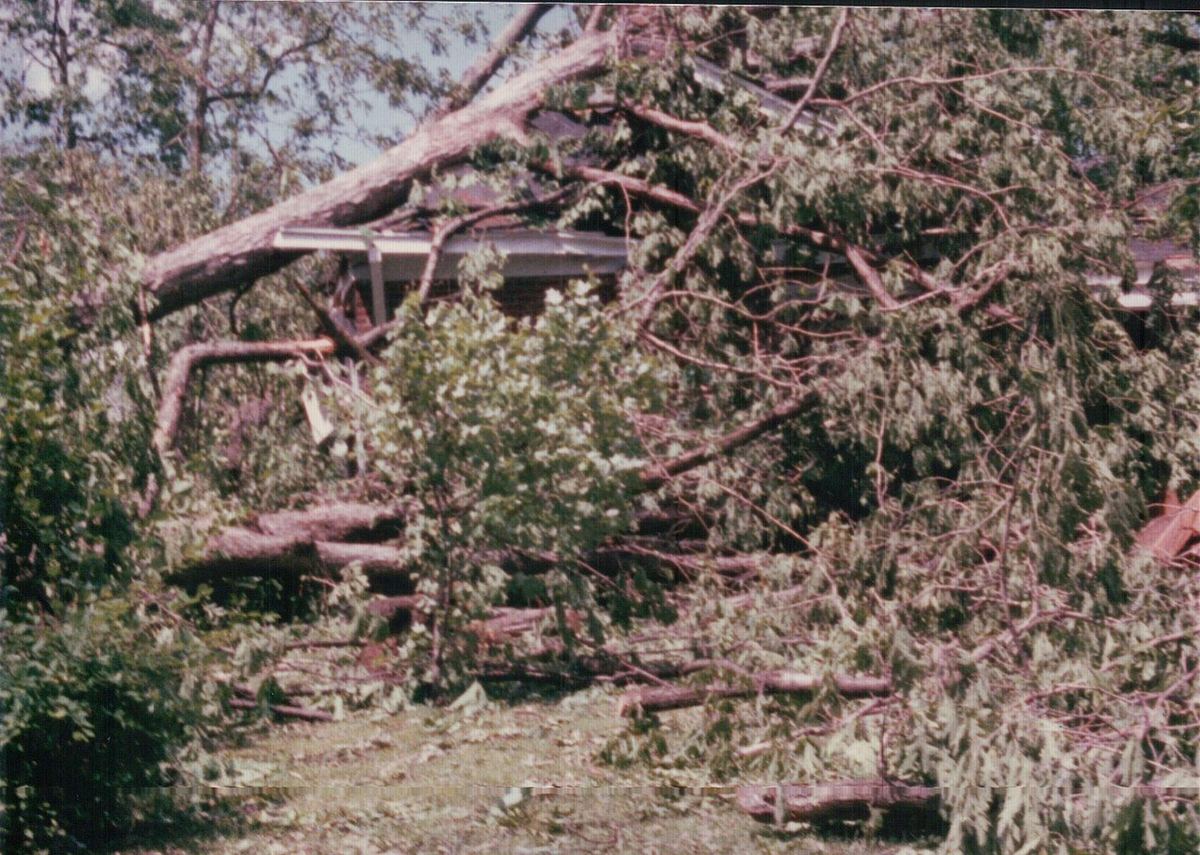
Trees often break rafters or trusses, crack decking and damage ceilings and wiring, not just shingles. Ask your roofer to open up and photograph the framing, and ask the adjuster whether a structural engineer is needed. On raised beach houses, check the porch roof, decks and stairs too. See reading your estimate.
If you cannot stay in the house
Additional living expense (Coverage D) may pay for a hotel or rental while repairs are made. After a hurricane, lodging fills fast, so ask your insurer early how much and for how long, and keep receipts.
Preventing the next one
- Have a certified arborist look at large trees within reach of the house every few years and after each hurricane season.
- Watch for dead tops in pines, cracks, cavities, mushrooms at the base, and a new lean.
- Remove limbs that overhang the roof, using a pro near power lines.
- Removing a hazard tree before a storm is not usually covered, but it costs much less than a claim.
Live oaks and pines are common in Wilmington's older neighborhoods and on wooded lots in Castle Hayne, Burgaw and Leland. Saturated ground during tropical storms makes trees more likely to fall.
Tree removal limits in your policy
Most homeowners policies pay to remove a tree that damaged a covered structure as part of that claim. Removing a tree that fell without hitting anything is different: many standard forms cover it only in limited cases, such as when it blocks a driveway or a ramp, and often cap it, commonly at $1,000 per loss and $500 per tree. Your policy may differ, so read the "debris removal" or "trees, shrubs and other plants" section, and ask the insurer before a crew cuts up a tree that is not on the house.
Soaked ground and back-to-back storms
Long tropical rain soaks sandy coastal soil and weakens root holds, so trees that survived the first storm can fall days later in ordinary wind. After a multi-day soaker like Florence, keep an eye on leaning trees and new cracks in the soil around roots, and keep people away from that side of the house until an arborist looks at them.
Getting the tree off safely
Large trees on a roof are often lifted off in pieces with a crane so they don't do more damage. Ask the tree company for proof of liability and workers' compensation insurance, get the price in writing, and photograph each stage. Keep the invoice for the claim.
Frequently asked questions
Who pays when my neighbor's tree falls on my house?
Usually your own insurer, minus your deductible. If the neighbor was negligent, your insurer may seek reimbursement.
Does NCIUA cover a tree blown onto my house?
If NCIUA covers windstorm at your property, a wind-thrown tree is usually handled under that policy, subject to its terms and deductible.
Is tree removal covered?
Often up to a limit when the tree hit a covered structure. Trees that fall without hitting anything may not be.
Should I cut the tree off the roof myself?
No. Hire a professional tree service and photograph everything first.
Will insurance pay to remove a tree that fell in my yard but missed the house?
Sometimes, but usually only in limited cases and up to a small limit. Many standard forms cap it at about $1,000 per loss and $500 per tree, and some require the tree to block a driveway or ramp. Check the debris removal section of your policy.
Policies vary. Check your own policy and ask your insurer or agent about anything that affects your claim. Laws and rules can change; this page reflects official sources as of October 29, 2026. WilmingtonNCRoofer.com is not a contractor, insurer, adjuster or law firm.
Find local help
Roofing contractors serving Wilmington and the Cape Fear coast · Ask for storm help · Counties and towns