Photo credits
Every photo on this site is public domain (mostly U.S. government work) or Creative Commons licensed, from Wikimedia Commons. Illustrations were drawn for HERE City.
We use only photos we are allowed to reuse: works of the U.S. federal government (FEMA, NOAA, the National Weather Service and the U.S. military), which are in the public domain, and photos their authors released under Creative Commons licenses. We do not use photos from roofing companies, insurers, IBHS or news sites. If you are the author of a photo and see a credit error, email [email protected].
Photos may have been resized and cropped. Creative Commons ShareAlike photos remain under their original license.
Photos
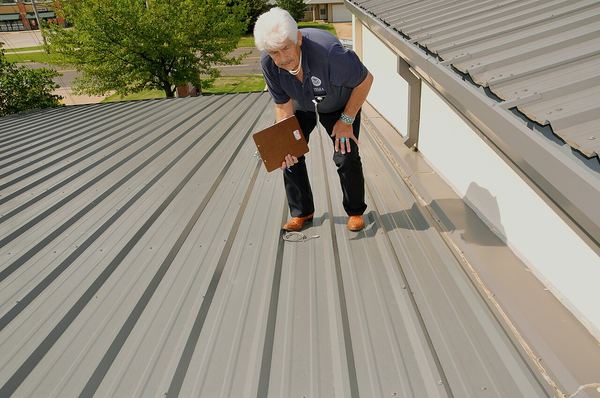
Metal roofs: an inspector sights along the ribs of a metal roof in Moore, Oklahoma, after May 2010 hail. Dents show best in low, raking light.
By Win Henderson / FEMA. License: Public domain (U.S. government work). Source: Wikimedia Commons.

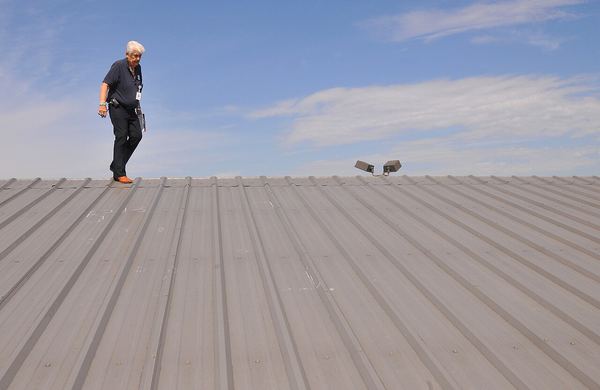
A careful roof walk on a hail-damaged metal roof (Moore, Oklahoma, 2010). Leave roof walks to the adjuster or a licensed roofer.
By Win Henderson / FEMA. License: Public domain (U.S. government work). Source: Wikimedia Commons.

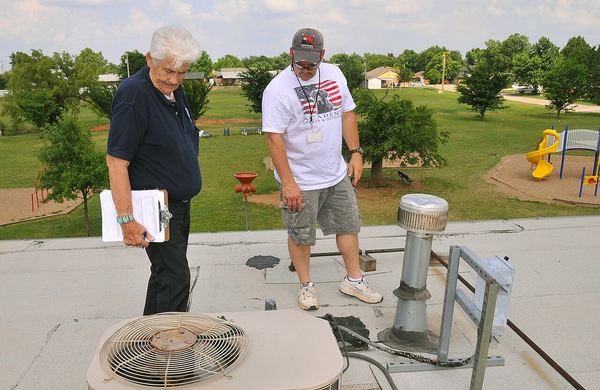
Soft metal and equipment: inspectors check a rooftop air conditioner and vent stacks for hail damage in Moore, Oklahoma (2010). Bent condenser fins and dented caps help show where hail hit.
By Win Henderson / FEMA. License: Public domain (U.S. government work). Source: Wikimedia Commons.

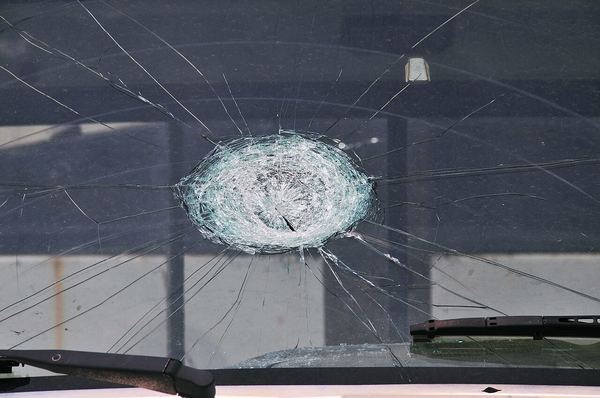
Baseball-size hail (about 2.75 inches) cracked this city truck windshield in Oklahoma in May 2010. Vehicles parked outside are good evidence of hail size and direction.
By Win Henderson / FEMA. License: Public domain (U.S. government work). Source: Wikimedia Commons.

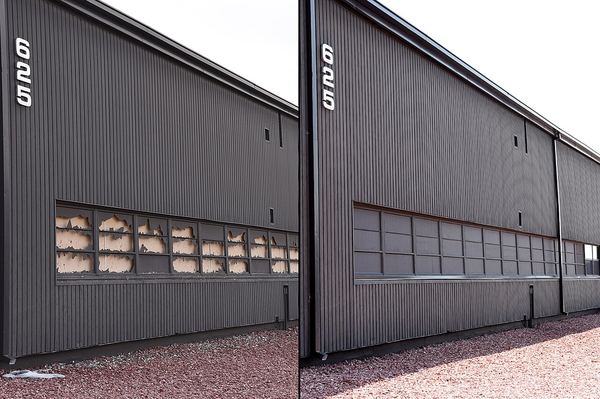
Hail broke the translucent window panels along this metal building at Peterson Air Force Base, Colorado, on July 28, 2016 (left); the right side shows it after repairs.
By Robert Lingley / U.S. Space Force. License: Public domain (U.S. government work). Source: Wikimedia Commons.

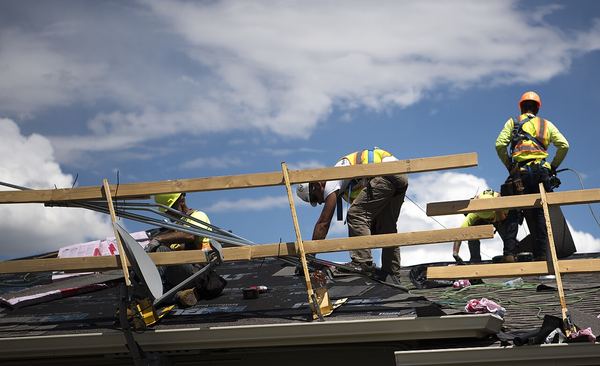
After the claim: crews re-roof housing at Schriever Air Force Base, Colorado, in July 2019 to repair damage from a 2018 hailstorm.
By Airman 1st Class Jonathan Whitely / U.S. Air Force. License: Public domain (U.S. government work). Source: Wikimedia Commons.

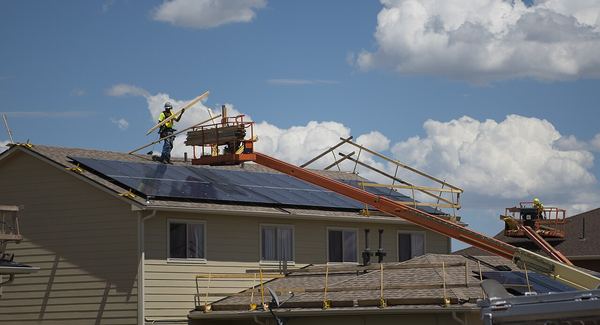
A full roof replacement in progress after hail, Schriever Air Force Base, Colorado, 2019.
By Airman 1st Class Jonathan Whitely / U.S. Air Force. License: Public domain (U.S. government work). Source: Wikimedia Commons.

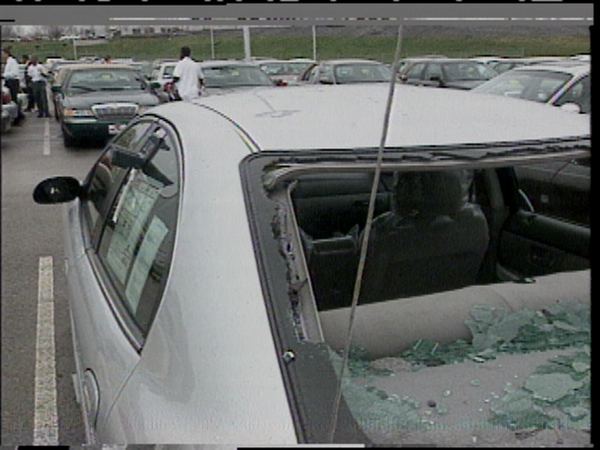
Hail damage to a car in Missouri, April 2001. When a car parked outside is dented, check the roof, gutters and siding facing the same direction.
By NWS St. Louis. License: Public domain (U.S. government work). Source: Wikimedia Commons.

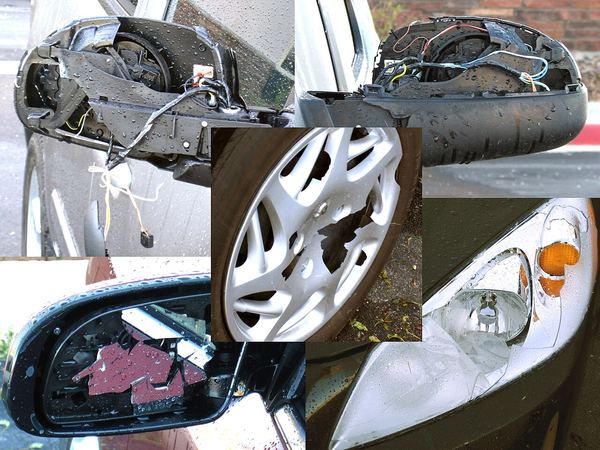
Hail damage on vehicles after the July 4, 2010 hailstorm in Limon, Colorado.
By James St. John. License: CC BY 2.0. Source: Wikimedia Commons.

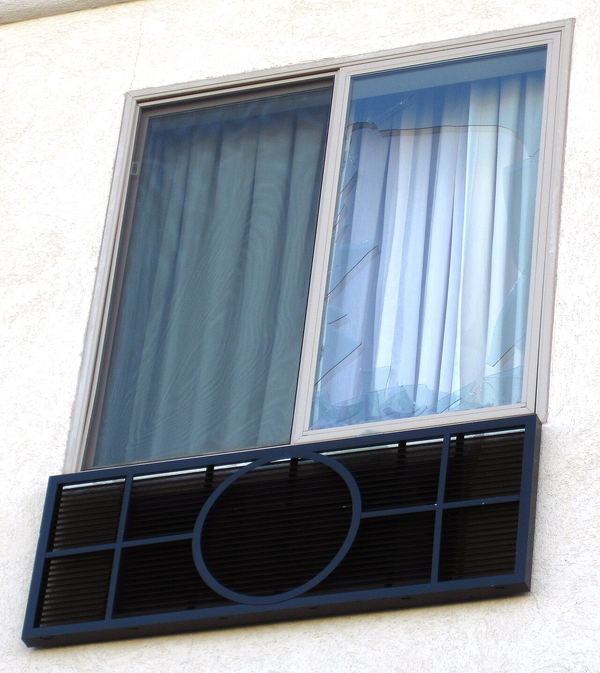
A west-facing window broken by hail in Limon, Colorado (July 2010). Damage concentrated on one side of a building points to the storm's direction.
By James St. John. License: CC BY 2.0. Source: Wikimedia Commons.

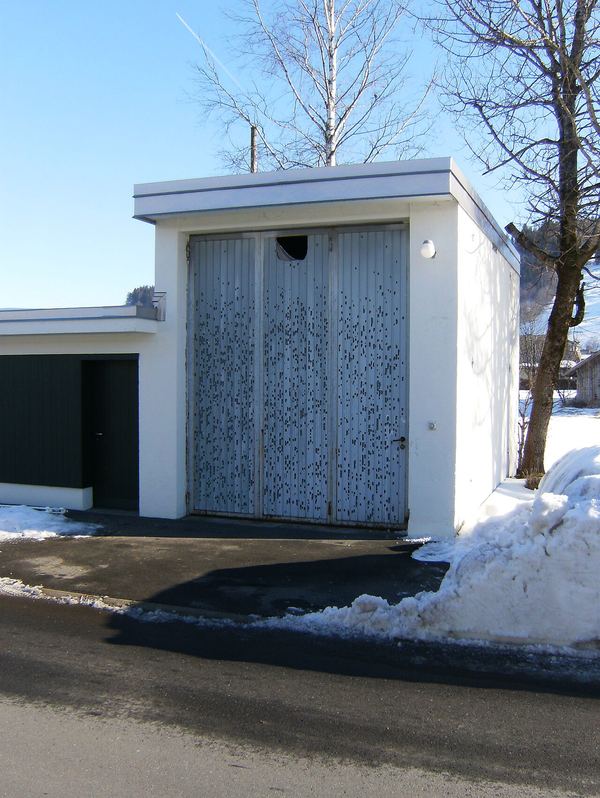
Siding and walls: hail pocked this exterior wall in Einsiedeln, Switzerland, in July 2010. Painted siding, stucco and vinyl can show the same spatter of impact marks.
By Chris.urs-o. License: CC BY-SA 3.0. Source: Wikimedia Commons.

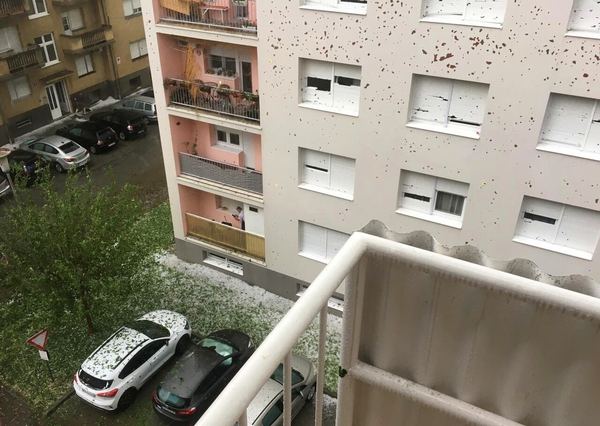
Hail spattered the facade of this apartment building in Požega, Croatia, on June 25, 2021, and dented the cars below.
By Nikola. License: CC BY-SA 4.0. Source: Wikimedia Commons.


Golf ball size hail is about 1.75 inches across.
By NOAA. License: Public domain (U.S. government work). Source: Wikimedia Commons.

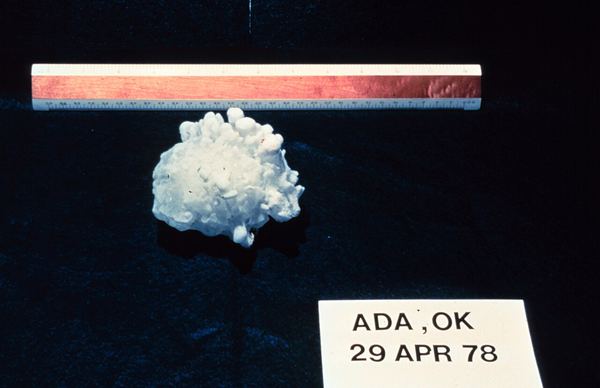
A large hailstone measured against a ruler, Ada, Oklahoma, April 29, 1978. Measure the largest stones you find and photograph them next to a ruler or coin.
By NOAA. License: Public domain (U.S. government work). Source: Wikimedia Commons.

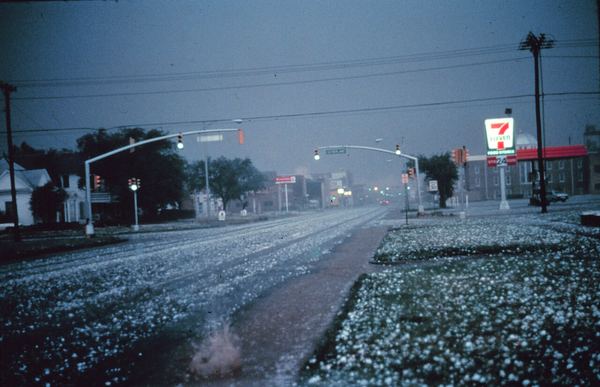
Large hail piles up on a street during a severe thunderstorm; the largest stones were about 2 to 3 inches.
By NOAA Photo Library / NSSL. License: Public domain (U.S. government work). Source: Wikimedia Commons.


A very large, irregular hailstone. Spiky stones like this can strike harder than their size suggests.
By NOAA Photo Library. License: Public domain (U.S. government work). Source: Wikimedia Commons.

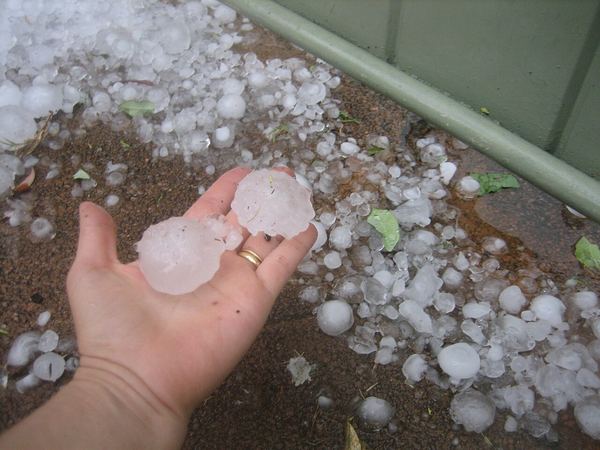
Hail about golf ball size in a hand, for scale (Perth, Australia, March 2010).
By FCB Excalibur. License: CC BY-SA 2.0. Source: Wikimedia Commons.

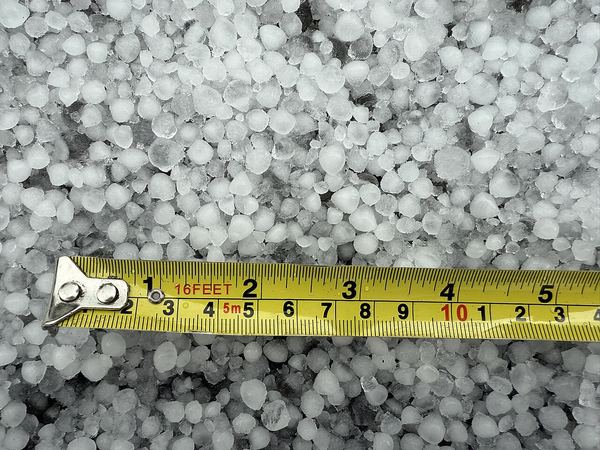
Small hail measured with a tape. Hail under about an inch rarely damages a sound asphalt roof, but measure and photograph it anyway.
By Sebbog13. License: CC BY-SA 4.0. Source: Wikimedia Commons.

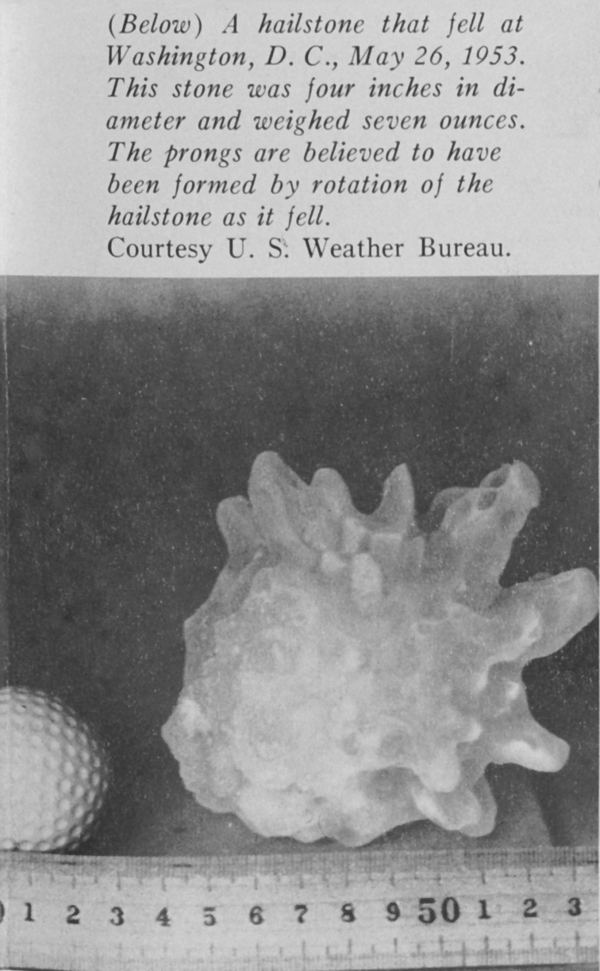
A 4-inch hailstone that fell in Washington, D.C., in May 1953, from Snowden D. Flora's "Hailstorms of the United States" (1956).
By NOAA Photo Library. License: Public domain (U.S. government work). Source: Wikimedia Commons.


Tarps cover a hail-damaged roof after the November 2014 Brisbane hailstorm while repairs wait.
By Shiftchange. License: CC0 1.0 (public domain dedication). Source: Wikimedia Commons.

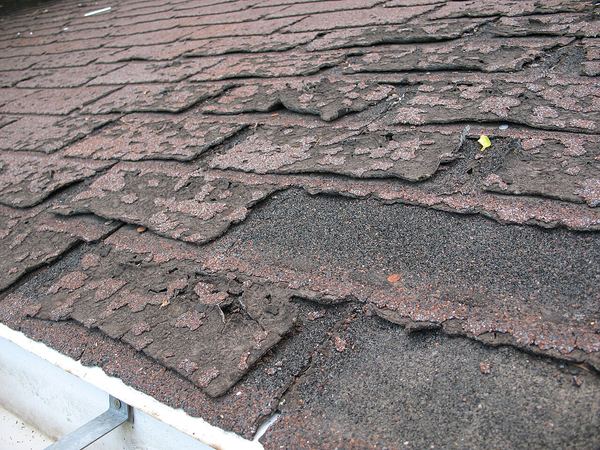
Not hail: age and weather. These shingles shrank and cracked over many years, evenly across the slope. Insurers usually treat this as wear, not storm damage.
By Dale Mahalko. License: CC BY-SA 3.0. Source: Wikimedia Commons.

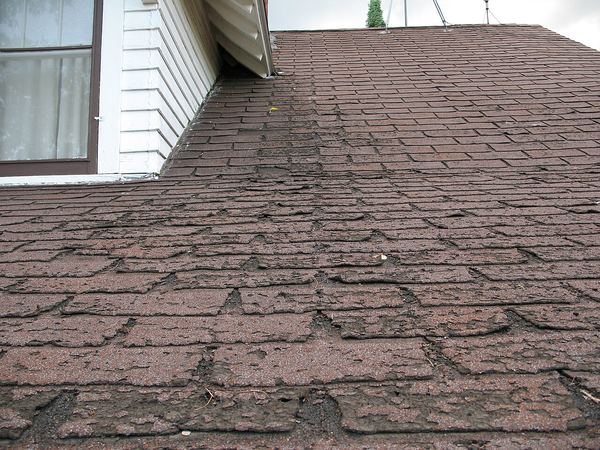
Not hail: wear concentrated where water drains off an upper roof. A pattern that follows water flow points to wear; hail hits are random.
By Dale Mahalko. License: CC BY-SA 3.0. Source: Wikimedia Commons.

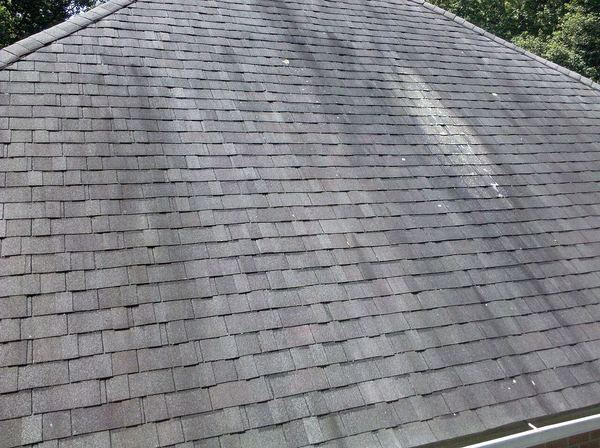
Not hail: the dark streaks are algae (Gloeocapsa magma). They are cosmetic and are not storm damage.
By Mcbooz. License: CC BY-SA 3.0. Source: Wikimedia Commons.

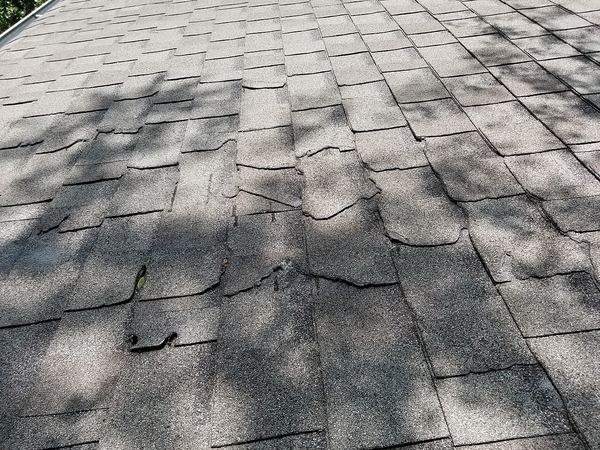
Wind and debris: branches blown out of a nearby tree during a thunderstorm cracked these shingles. Branch damage is usually concentrated under the tree.
By Samuel Bolton. License: CC BY-SA 4.0. Source: Wikimedia Commons.

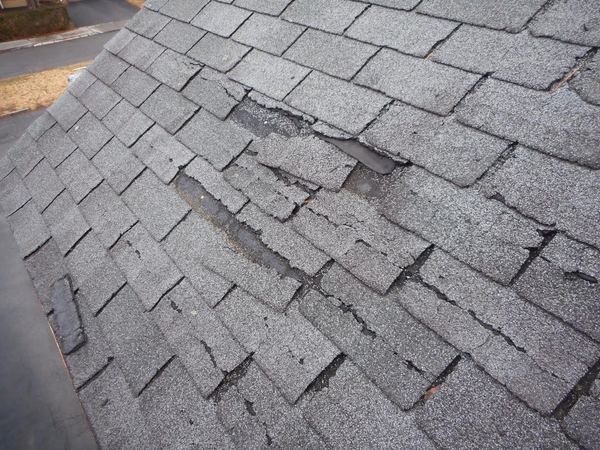
Not hail: these shingles failed from poor installation and age, according to the photographer. Installation defects are generally not covered by insurance.
By Sandul1234. License: CC BY-SA 4.0. Source: Wikimedia Commons.

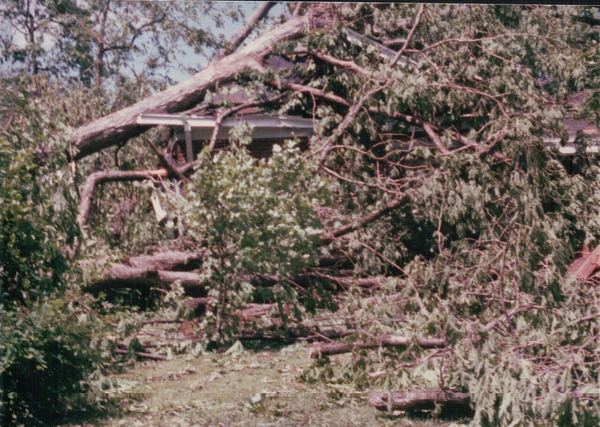
A tree on the roof after the May 5, 1989 tornado outbreak in Winston-Salem, North Carolina.
By Nicole Johnson. License: CC BY 4.0. Source: Wikimedia Commons.

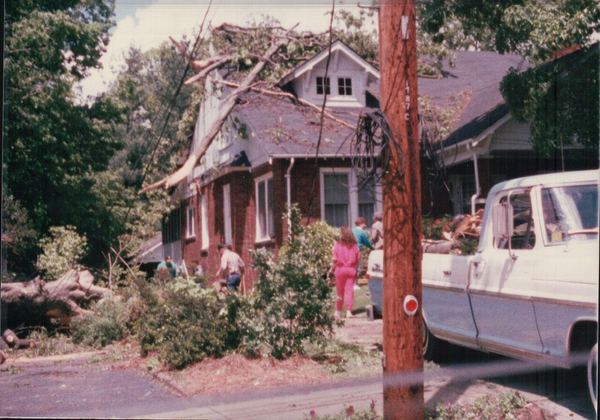
Roof damage from a downed limb, Winston-Salem, North Carolina, May 1989.
By Nicole Johnson. License: CC BY 4.0. Source: Wikimedia Commons.

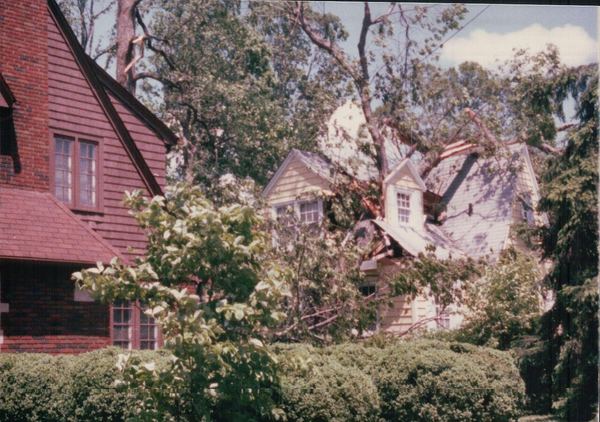
Tornado damage to a roof and dormer, Winston-Salem, North Carolina, May 1989.
By Nicole Johnson. License: CC BY 4.0. Source: Wikimedia Commons.

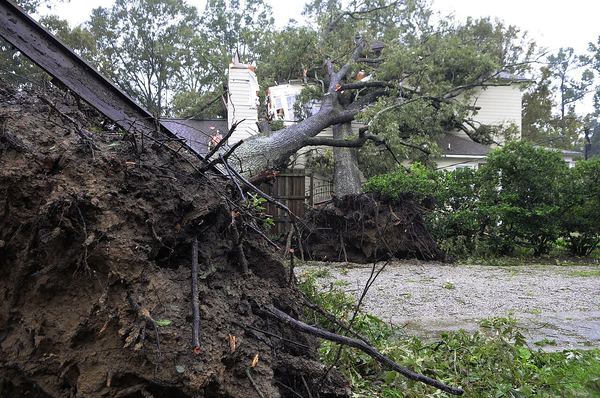
Two trees uprooted by wind fell on this home in Baton Rouge, Louisiana, after Hurricane Gustav (September 2008).
By Barry Bahler / FEMA. License: Public domain (U.S. government work). Source: Wikimedia Commons.

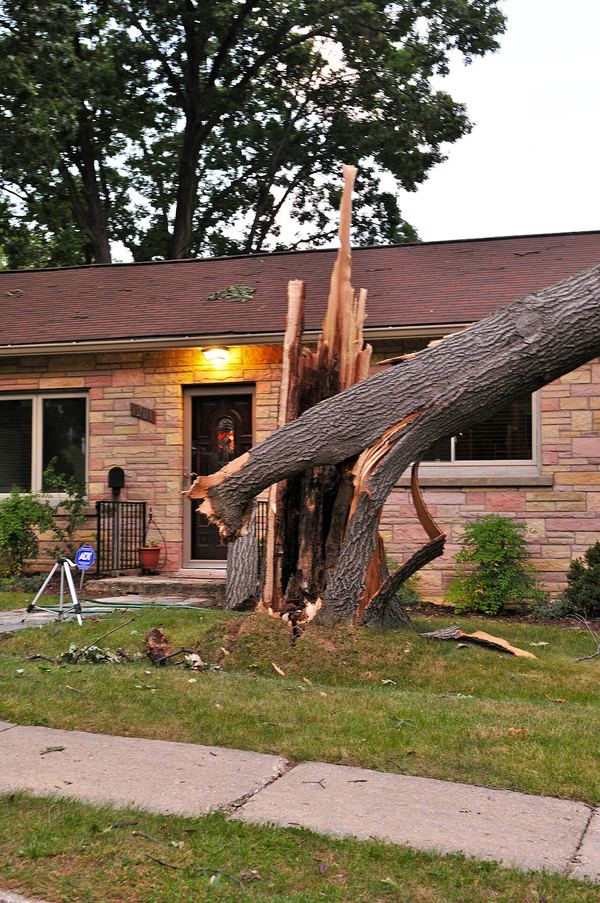
A trunk snapped by a derecho leans on a house in Arlington, Virginia, June 2012.
By Arlington County. License: CC BY-SA 2.0. Source: Wikimedia Commons.


Wind: Hurricane Isaac blew shingles off the roof on the left in 2012, while the house next door shows no visible damage. Wind damage often varies house to house.
By Infrogmation of New Orleans. License: CC BY-SA 3.0. Source: Wikimedia Commons.


Temporary protection: a worker fastens a blue tarp with wood strips after Hurricane Ike (Texas, 2008).
By Leif Skoogfors / FEMA. License: Public domain (U.S. government work). Source: Wikimedia Commons.

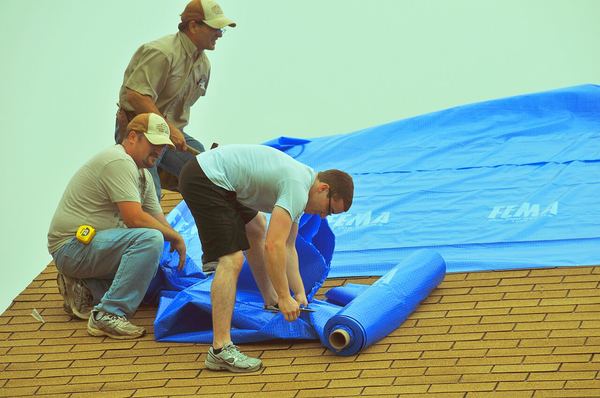
A homeowner and volunteers roll out a tarp to keep water out after tornado winds (Tecumseh, Oklahoma, May 2010).
By Win Henderson / FEMA. License: Public domain (U.S. government work). Source: Wikimedia Commons.

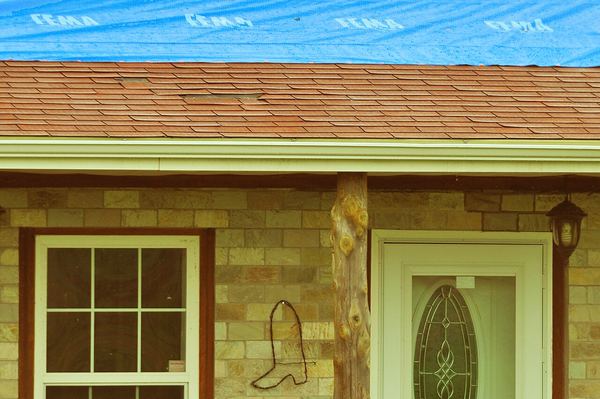
A tarp protects a tornado-damaged roof until repairs (Tecumseh, Oklahoma, 2010). Photograph the damage before the tarp goes on.
By Win Henderson / FEMA. License: Public domain (U.S. government work). Source: Wikimedia Commons.

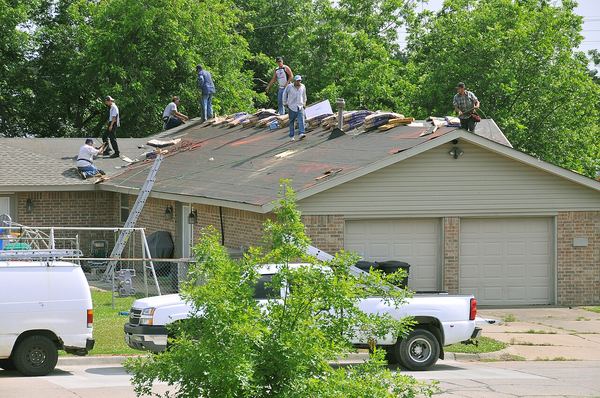
A roofing crew replaces shingles on a storm-damaged home in Moore, Oklahoma (May 2010).
By Win Henderson / FEMA. License: Public domain (U.S. government work). Source: Wikimedia Commons.

Illustrations
These diagrams were drawn for HERE City to show what legally reusable photos cannot. They are labeled as illustrations wherever they appear.
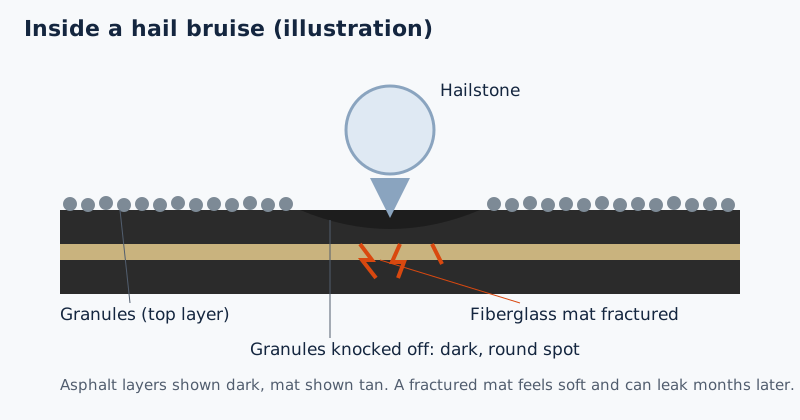
Illustration: what a hail bruise is. The granules are knocked away and the fiberglass mat under the asphalt is fractured, so the spot feels soft and can let water in later.
Illustration by HERE City.
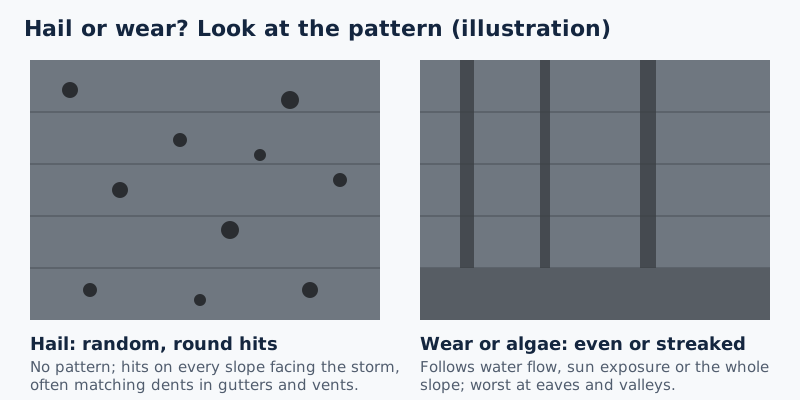
Illustration: hail hits are random and round, with no pattern. Wear, blistering and algae follow the sun, water flow or the whole slope.
Illustration by HERE City.
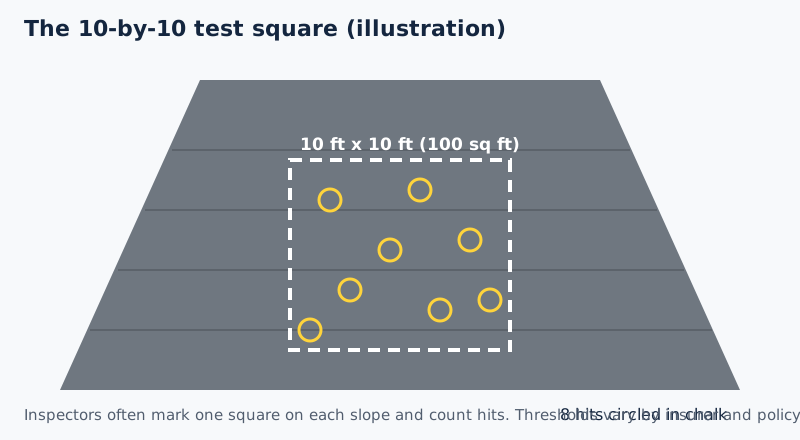
Illustration: the 10-by-10-foot test square many adjusters and roofers use. Hits inside the square are circled and counted on each slope.
Illustration by HERE City.
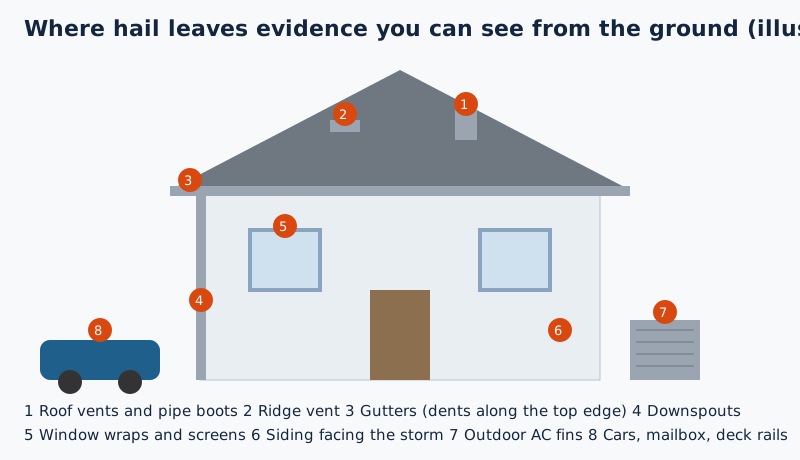
Illustration: where to look for hail from the ground. Soft metal and painted surfaces show hail first.
Illustration by HERE City.
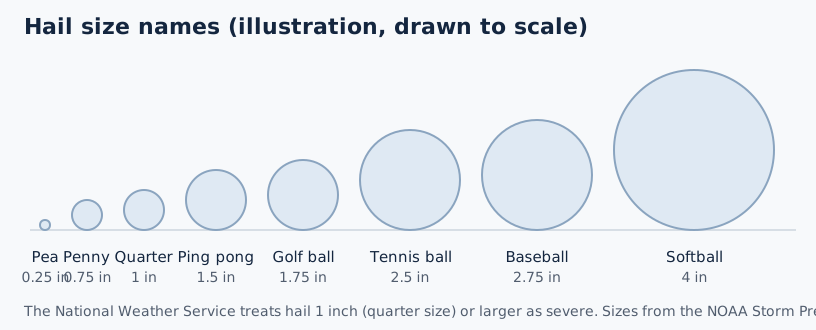
Illustration: common hail size names used by the National Weather Service, drawn to scale.
Illustration by HERE City.
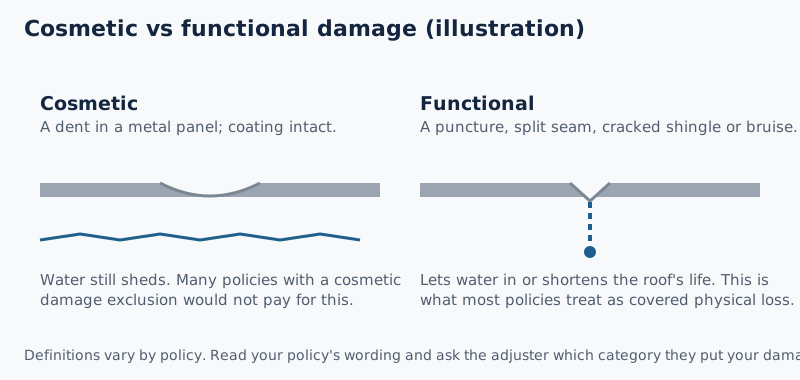
Illustration: cosmetic damage changes how a roof looks; functional damage affects how it keeps water out or how long it will last.
Illustration by HERE City.