How do hurricane roof claims work on the Cape Fear coast?
Hurricanes are the Cape Fear coast's biggest roof risk. How named-storm deductibles and NCIUA Beach Plan coverage work, wind versus flood, how to prepare and what to do after landfall.
Last reviewed against official sources. General information, not insurance or legal advice.
On the Cape Fear coast, wind and hail coverage is often through the NCIUA Beach Plan with its own named-storm deductible, usually a percentage of the dwelling limit. Homeowners and wind policies cover wind and rain through wind-damaged openings; storm surge and flooding need separate flood insurance.
Hurricane Florence made landfall near Wrightsville Beach on September 14, 2018, and Hurricane Isaias came ashore near Ocean Isle Beach on August 3, 2020, according to the National Hurricane Center. NOAA's Storm Events Database also records hurricane conditions on the Cape Fear coast during Matthew in October 2016, and tropical storm conditions during at least ten other storms since 2006.
Which deductible will apply after a hurricane?
Short answer: often a named-storm or hurricane deductible set as a percentage of your dwelling coverage, not your regular dollar deductible.
Many North Carolina policies, especially near the coast, carry a separate hurricane, named-storm, or wind/hail deductible, often written as a percentage of the dwelling coverage (Coverage A) rather than a flat dollar amount. The declarations page shows which deductibles apply. The NC Department of Insurance can explain terms and take complaints.
Illustration: a 2% deductible on $400,000 of dwelling coverage is $8,000; a 5% deductible on $350,000 is $17,500. On many coastal claims, that means smaller roof repairs are paid by the homeowner. Read the trigger language, which determines when the deductible starts and ends.
The North Carolina Insurance Underwriting Association (the Coastal Property Insurance Pool) writes wind and hail coverage for many properties in the state's beach and coastal areas when the regular market will not.
Wind or water: which policy pays?
Short answer: wind, and rain that comes in through wind damage, belongs to your homeowners or wind policy. Storm surge and rising water are flood, which requires a separate flood policy, usually through the NFIP.
| What happened | Usually handled by |
|---|---|
| Shingles blown off, rain through the ceiling | Homeowners or NCIUA wind policy |
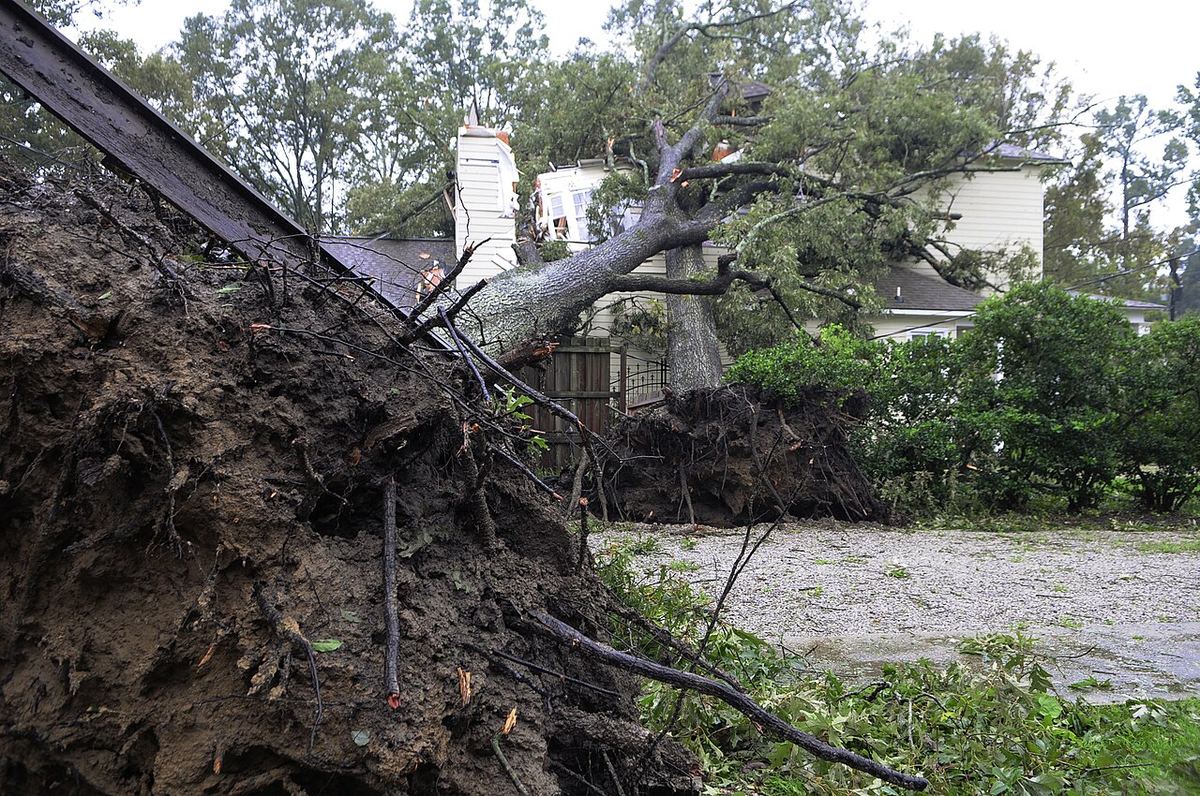
| Pine or oak blown onto the roof | Homeowners or NCIUA wind policy |
| Surge or river water inside the house | Flood policy |
| Both roof damage and flooding | Separate claims, adjusters and deductibles |
Florence brought both wind and extreme rainfall, so many claims had to separate them. Photos of the roof damage and the interior water line help adjusters do that.
How can you get your roof ready?
- Take "before" photos at the start of every season. They are your best answer to a wear-and-tear finding.
- Clean gutters and downspouts so heavy rain can drain.
- Have a tree service trim limbs over the roof; never work near power lines yourself.
- Store or tie down anything that could fly.
- When you reroof, consider a sealed roof deck, ring-shank nails and stronger edge details, such as those in the IBHS FORTIFIED Roof standard, and ask your insurer about any discount.
The first days after landfall
- Wait for local officials to allow re-entry, especially on the islands and causeways.
- Photograph and video every side of the house, the roof from the ground, ceilings, the attic and any water line before you clean up.
- Stop further damage with tarps and boarding, and pull out wet drywall and insulation to slow mold. Keep receipts.
- Report each claim: homeowners, NCIUA and flood if you have them. Note the storm name.
- Expect long waits for adjusters and contractors, and screen anyone who knocks; see questions to ask a roofer.

Recent tropical storms on the Cape Fear coast
Tropical storm conditions were recorded in New Hanover, Brunswick or Pender forecast zones during Ernesto (2006), Hanna (2008), Irene (2011), Sandy (2012), Andrea (2013), Arthur (2014), Ana (2015), Hermine (2016), Elsa (2021), Colin and Ian (2022) and Ophelia (2023), according to the NOAA Storm Events Database. Storm surge was recorded during Isaias in 2020 and Ian in 2022.
Federal disaster help
When a federal disaster is declared, FEMA Individual Assistance may cover some uninsured needs, but it does not replace insurance and generally requires you to file with your insurer first. Apply through DisasterAssistance.gov.
Cape Fear hurricane season roof checklist (printable)
- By June 1: take dated photos of the roof and every side of the house.
- Write down your named-storm or hurricane deductible: ____% of Coverage A = $____
- Do you have an NCIUA wind policy? Policy number: ____
- Do you have flood insurance? (New NFIP policies usually wait 30 days.) Y / N
- Clean gutters and have overhanging limbs trimmed, especially live oaks and pines.
- Plan where porch furniture, grills, kayaks and trash cans will go.
- Keep tarps, plywood, screws and a ladder ready; know your shutoffs.
- Save your insurer, NCIUA and flood carrier phone numbers in your phone.
- After landfall: photograph damage and any water line before cleanup.
- Report each claim separately and write down each claim number.
Frequently asked questions
Does my named-storm deductible apply to a tropical storm?
It depends on the trigger in your policy. Some apply to any named storm, others only to hurricanes.
Does NCIUA cover flooding?
No. NCIUA wind and hail policies, like homeowners policies, exclude flood. You need a separate flood policy.
Can I file wind and flood claims for the same hurricane?
Yes, if you have both coverages. Expect separate adjusters and separate deductibles.
Should I climb up to tarp my roof?
Only if it is safe. Hiring emergency tarping is safer, and reasonable costs are generally part of the claim. Take photos first.
Policies vary. Check your own policy and ask your insurer or agent about anything that affects your claim. Laws and rules can change; this page reflects official sources as of October 29, 2026. WilmingtonNCRoofer.com is not a contractor, insurer, adjuster or law firm.
Find local help
Roofing contractors serving Wilmington and the Cape Fear coast · Ask for storm help · Counties and towns
Sources
- NC Department of Insurance
- NOAA National Hurricane Center
- Ready.gov: Hurricanes
- FEMA National Flood Insurance Program: FloodSmart
- NOAA NCEI: Storm Events Database
- IBHS FORTIFIED Roof
- NC Department of Insurance: Windstorm and hail (named storm deductibles)
- National Hurricane Center: Tropical Cyclone Report, Hurricane Florence (2018)
- National Hurricane Center: Tropical Cyclone Report, Hurricane Isaias (2020)
- North Carolina Insurance Underwriting Association (Beach Plan)